
Adam is a young Muslim boy. From the outside, Adam is living what many would call the idyllic life. He's excelling in his studies, spending time with his family, going to the mosque regularly and has aspirations to become a surgeon one day. He lives at home with his parents and siblings, and they all get along fine. He's got friends that he sees regularly. No one would ever even consider he was hiding an entire life from the people around him, consumed by this hidden struggle.
Let's picture a day in the life of Adam. He wakes up for Fajr and gets ready to go to his college/university. He opens his phone for 5 minutes whilst on the way there. Strike one occurs here. He arrives and attends his classes, and has lunch with his friends, then goes to pray dhuhr. He finishes off his work for today, prays asr, then catches the bus. On his way home, he sees a girl he finds attractive. Strike two. He gets home, prays the rest of his prayers. He has dinner with the rest of his family, then watches a movie. The movie has a scene in it, and he can't control himself anymore. Strike 3. Outwardly, Adam has not committed a sin yet, but these things which he has seen all day have attacked his spirit. They slowly burn until suddenly, he snaps. He has been overcome with lust and acts out. He hides in his room, and hides his shame from everyone, and no one suspects a thing.
Unfortunately, this story is far too common in our youth. So many youth, of both genders, are drawn into this, whether it be from a notion that it's normal, or that it is a prevention of something worse. The truth is, lust is rife within the societies that we live in, and rife across social media too. One of the most harmful sins to Muslims, but also one of the most misunderstood and underestimated.
The UK children's commissioner found that 50% of children have viewed pornographic content by the age of 13. A YouGov survey found that 48% of people under the age of 30 consume this content, and 20% having consumed it in the last week. This problem is too rife for us to ignore, especially when it can affect so many Muslim youth as well. Abu Huraira reported in Sahih Muslim (2658a, Book 46, Hadith 33), that the Prophet of Allah (ﷺ) said "Allah has fixed the portion of adultery a man will indulge in, there would be no escape from it. The adultery of the eye is the lustful look. The adultery of the ears is listening to voluptuous song or talk, and the adultery of the tongue is licentious speech. The adultery of the hand is lustful grip, and the adultery of the feet is to walk to the place where he intends to commit adultery." Verily, our deen paints out for us a very clear image of what Zina is – but the first part of the hadith, mentioning no escape – this confuses many. Is Zina inescapable? Is it something that despite the punishment being so grave, we can't escape it?
Whenever you unlock your phone, whenever you look on TV, at massive billboards when you drive down the road or listen to music with certain lyrics, you risk falling into zina. Whereas these aren't major within themselves, for those who are addicted even something small like this can be a trigger into their habits. Is this what is meant by the inescapable part? Rather, it is in the nature of people to be lustful, as humans. However, we must fight against it, guard our chastity and protect ourselves from these issues.
There are steps we can take towards protecting ourselves and the first, and best example is to lower our gaze. In Surah An-Nur Allah (ﷻ) says "O Prophet! Tell the Believing men to lower their gaze and guard their chastity. That is purer for them. Surely Allah is All-Aware of what they do." (24:30) Allah (ﷻ) provides us with the first tool. Lower your gaze, look away from anything wrong and remind yourself of Allah's presence with dhikr of him. Protect not only yourself, but your family too from these fitnas, and guide them away from this, teach everyone to lower their gaze.
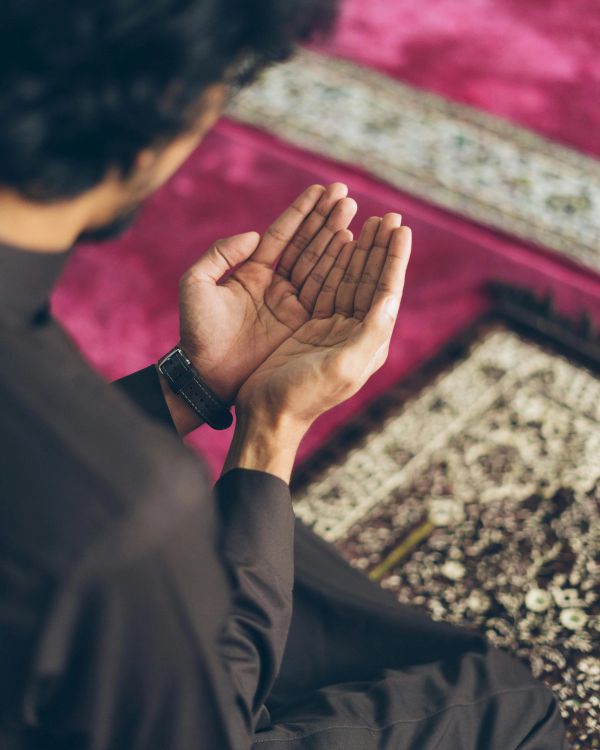
The nature of addiction however is, that no matter how much you try, you just might not be able to do the first step. That is why the next step prescribed for us is extremely important. Turn back to Allah. The power of Tawbah and Istighfar is extremely important, and for those who have fallen into addiction it may be a matter of continuous repentance. One may get tired of their repentance and think it useless, but Allah (ﷻ) is Al-Ghafur, the most forgiving. He does not tire from our repentance. In Surah Az-Zumar Allah (ﷻ) says "O my servants who have exceeded the limits against their souls! Do not lose hope in Allah's mercy, for Allah certainly forgives all sins. He is indeed the All-forgiving, most merciful."
If one wants more practical steps, however, to escape their issues, then a few simple steps must be taken. One needs to realise where the addiction is coming from, and trace the triggers back to where they begin. Whether it be certain social media or speaking to certain people. We must stay away from these, and put blocks in place. There are apps available on the app store to help block any wrong sites. Another aid would be either removing yourself from social media or limiting how much you use it. It does not matter which form (Instagram, TikTok), all social media can be corrupted by Zina. This may seem like a difficult step for some, but remind yourself of your struggle, and how this short-term difficulty would be far lesser than the long term problem with addiction, which social media is directly feeding into.
Once a person can identify their triggers, they need to regularly remind themselves of their journey, every single day. This is not a problem that can be dealt with overnight. We need to target 3 different areas which this addiction can encompass – the spiritual domain, the physical domain, and the financial domain. To work on the spiritual, there are some things you can start right away. Daily adhkar and repentance, dua specific to your own situation, and asking Allah for guidance and strength. Whether it be 5 minutes of Nafl and Dua in the morning and evening, or a few minutes after every salah of just repenting and reminding yourself of your struggle against your addiction, it can be life-changing. Turn to Allah for your help first. When you know that your thoughts are becoming sinful, remind yourself Allah (ﷻ) is with you. Say aloud astaghfar, and say to Allah that you turn back to him from your lustful thoughts.
For the physical, we can take a few different steps also. One thing is to remove ourselves from places that we fall into this sin. If we know that our bedroom, or a certain area is going to be wrong for us to stay in as that is where we fall into this sin, stay away from it for as long as possible. Spend time around others, whether it be your family or friends, as much as you can, or go to a public place such as a library or gym. Another thing, if we keep a physical reminder of Allah's (ﷻ) mercy and presence, either on our person or nearby us in a visible place, then it can help keep us safe. For some, it may be a miswaak or tasbih in the pocket, for some it may be the names of Allah around them.
Finally, one tenet that is overlooked by many is charity. This does not just mean however, giving money regularly (although that can be a part of it), it also means helping those you know who might struggle with these issues as well. The action of either giving money with the intention of Allah forgiving you for your sins, or the action of helping another who might have the same problems, can also serve as protection for you. Some people have set up daily direct debits to help them stay clean, as a reminder going from their wallet of what they need to do. If one focuses on these domains – physical, spiritual, and financial, then we can pray that Allah (ﷻ) helps us through these issues.
We pray for all those around us who struggle with addiction, that Allah (ﷻ) helps them grow from it, and that it may be a test that they can overcome. We pray that Allah (ﷻ) grants them strength, and we pray that Allah (ﷻ) can grant them forgiveness. We pray to Allah (ﷻ) that we can have the strength to help those who have struggled, and help bring them closer to Allah (ﷻ). We pray that we can remember that Allah (ﷻ) is with us always, and can see us. We remember the verse in Surah An-Nazi'at "And as for those who were in awe of standing before their Lord and restrained themselves from Evil Desires, Paradise will certainly be their home" (79:40-41).
Temptation
What happens when temptation builds up slowly; one glance, one scene, one moment of weakness at a time? Khizar explores the reality of addiction and lust in the lives of young Muslims today, and the practical, faith-driven steps we can take to protect ourselves.
More to read
Other articles in Struggles

The Neighbour Before the Home
If all the people are pleased with you but Allah is not, what have you gained? If Allah is pleased with you but no one else is, what have you lost?

Stay Spiritually Conscious
Instagram, TikTok, YouTube. Every scroll, every second like a battle against the nafs.
Falling into Sin
"Every Muslim will fall into sin but the best of us are those who repent."